Can Everyone Hear Me?
It’s likely that most of us have been at a conference, whether as a speaker or an attendee, and have found ourselves in a room that didn’t have a microphone. Typically, the microphone-free rooms are the smaller rooms with less seating capacity, and the microphone isn’t seen as a necessity. In fact, even in a room with a microphone, a speaker overwhelmingly makes the decision to ask, “Can you hear me okay?” or say, “I’ll use my teacher voice,” instead of picking up the microphone and using the aid for information delivery.
One of the things we continue to struggle with, not simply in education, is understanding what accessibility
actually means and that not all disabilities are visible. It’s not as if the
recognition of the need for audiological support in spaces is new, but being aware isn’t the same thing as addressing the issue and providing equitable, inclusive, and accessible solutions. For at least a decade, as witnessed by
this piece posted on LinkedIn, there have been larger and more targeted discussions in the education conference space about what accessibility in education means and how it’s impactful. However, when our social ecosystem has been designed for those without disabilities, real change can be hard to effect.
Take curb cuts, for instance. Wheelchairs have been in use for over a thousand years. In fact, according to
sciencemuseum.org.uk, “stone inscriptions from Ancient China and Greece suggest that wheeled furniture has been used to transport people since at least the sixth century AD.” However, it wasn’t until some World War II vets found themselves in wheelchairs that the idea of sidewalk accessibility began to grow with the first curb cut appearing in Michigan in
1945 thanks to the efforts of Jack Fisher, a disabled veteran and lawyer in Kalamazoo. The University of Illinois would become the first college to use curb cuts a decade later in
1955, but the Americans with Disabilities Act would not pass until 1990 when curb cuts would become legally required. The need was there, had been there, but it took over 40 years to move from the first curb cut to a realized accessibility feature for all Americans. And wheelchair use is a visible impairment.
When we talk about accessibility, it means accommodating more than visible disabilities, and an area that continues to be egregiously overlooked or ignored when dealing with invisible disabilities and the accessibility needs associated with them is the use of microphones in public speaking areas, including classrooms. I’ve seen well-meaning educators ask a group of their peers whether the microphone was really necessary, and it always makes me cringe. That question requires a person to single themselves out, to admit to a vulnerability in a room full of strangers, and that certainly doesn’t build trust with an audience. And regardless of whether an audience member is hearing impaired or not, all participants benefit from a presenter using a microphone.
Conference planners take note. This also pertains to your decisions around whether to provide mics in all session rooms. I found myself at a conference recently with no microphone; although, the information led me to believe there would be mics. I was transparent with the audience that I would use a microphone, but I didn’t have one. One of the attendees happened to have a mic that they traveled with, and they let me borrow it for the session. That didn’t help me in subsequent sessions, however, and with no microphone, I was left with my “teacher voice” as the solution, which is to say, there was no solution. Because ultimately, it doesn’t matter how loud your teacher voice is, the microphone is the solution.
This applies to our classrooms as well, but we’re less likely to see voice amplification solutions in those spaces. Kids are experiencing higher levels of hearing loss than ever before, and like adults, they aren’t likely to correct a confident adult about needing them to use a microphone or to speak up when they can’t hear. In fact, as
Lightspeed points out in
“How Instructional Audio Overcomes the Top Three Barriers to Learning,” “20% of teens will experience some hearing loss— a rate about 30 percent higher than 20 years ago, largely attributed to the increased use of headphones. “ This is also where products like the
Qball become important tools for students contributing because they are durable, meant for students/audience members to have a voice, and help students feel more comfortable contributing in class since it cuts down on the number of times a student will hear something like, “Could you say that again, please?” or, “Could you please speak up?” or, “I’m sorry; I couldn’t hear you.”.
Yes, there are individual technological options that will help with audiological input, but those options come with a price tag for the individual — AirPods and hearing aids especially — which means those solutions aren’t equitable, and we shouldn’t expect individual teachers and presenters to provide their own microphones or to assume that each student has the means to provide their own individual hearing aid.
Ultimately, when we treat accessibility options as necessities instead of as add-ons, the entire community benefits from it. No individual should need to prove the need for amplified speech in a classroom or conference session.
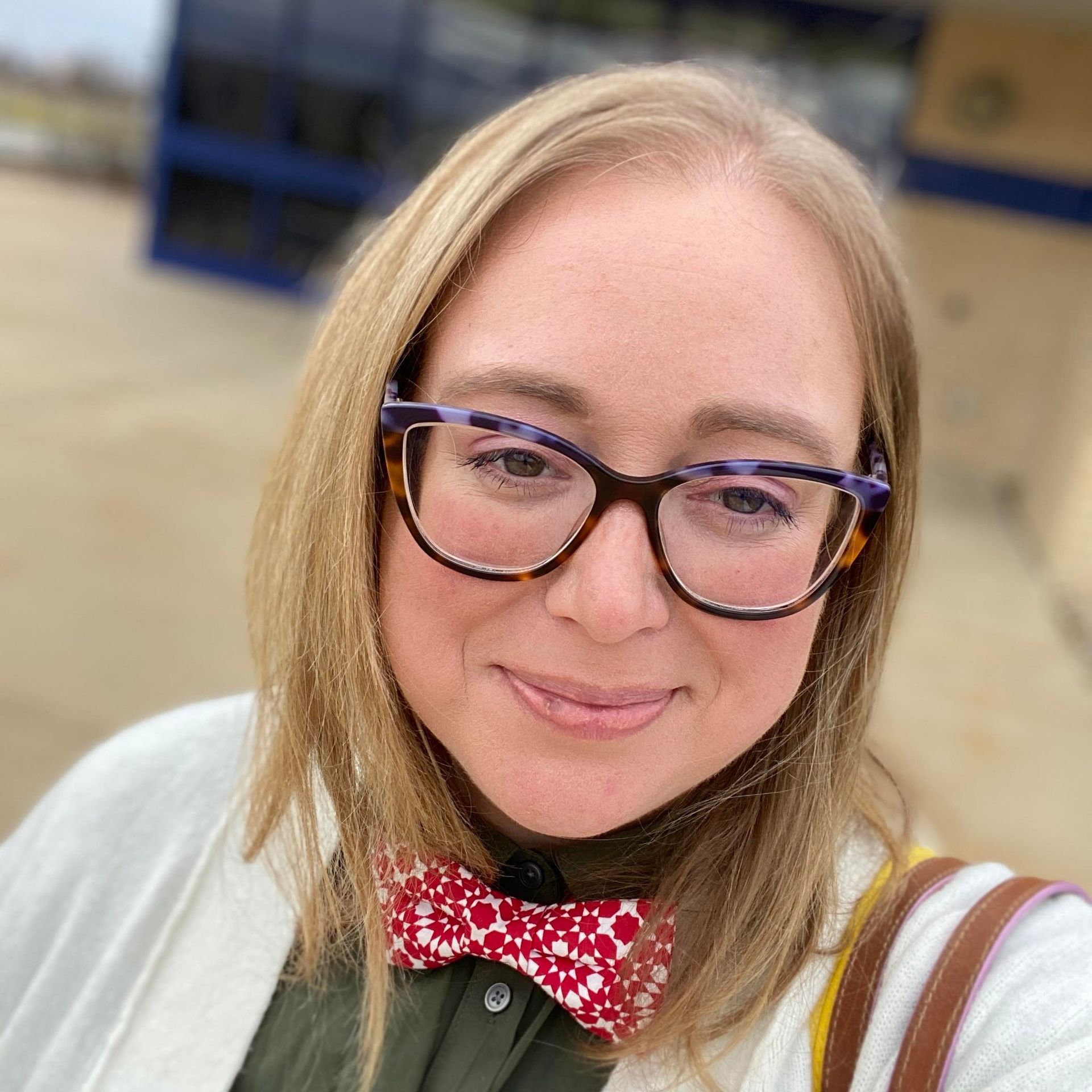
Stefanie Crawford is an educational reform advocate and entrepreneur. She has worked in education for nearly 20 years as a classroom teacher, K-12 instructional coach, Professional Development Coordinator for a Regional Office of Education, and currently as the Executive Director at Illinois Digital Educators Alliance. Stefanie advocates for changes in the traditional grading system, rethinking instruction, making lasting changes that support DEI & Accessibility for all students, including neurodivergent individuals, and the meaningful inclusion of technology in instruction.
RECENT ARTICLES