Call for Adaptation: An Open Letter to My CS Professor on AI and Course Flexibility
*Note from IDEA: This is a different kind of blog post than we usually run. However, in the interest of acknowledging the complex feelings educators are experiencing around AI and to be transparent about the practices that educators are experiencing in their own education so that others may benefit from their perspectives, we are publishing it.
Let me set the context for this email/blog post. I am currently taking a 100 percent online course on Object Oriented Programming to sharpen my skills at a community college. Halfway through the semester, the professor changed the course format to “hybrid,” requiring in-person proctoring of exams to combat the use of AI. While I understand the professor’s viewpoint of students using it to 100 percent cheat and write programs, I challenged the professor that it was unfair and misleading to say a course is online when indeed they were wanting to switch it to hybrid halfway through.
Furthermore, I questioned what our goal is as CS teachers (I teach high school CS.) I’m battling the use of AI in my course, but I think students need to balance understanding with the use of tools and resources available. This is what people do in the work world.
Another consideration I noted in my letter was how higher education needs to evaluate how to teach and assess. I predict within the next five years basic programming courses will no longer exist due to most entry level CS jobs being obsolete due to AI and other advanced tools.
**Note: I have removed the college name and professor’s name to protect their privacy.
Continue reading for my Open Letter to My CS Teacher
October 5, 2024
Dear Professor ****** :
Instead of taking my test like I planned today, I’m writing this response to your message.
I don't think it is fair or right for the structure of this course to be changed/altered half-way through the semester. I work as a high school computer science teacher. It's difficult for me to take courses to begin with when I have a full-time job, family, events to go to, and sometimes contractual work on the side.
Now you're telling me after the drop deadline, I'm going to have to find a way and time to schedule a test at a proctoring center? That will be nearly impossible for me, especially by next week. Is it possible for you to use Respondus LockDown Browser versus in-person proctoring? The reason I selected this course is due to the nature of it being 100% online, at my own pace, and within the times that I set aside for study for myself.
Your syllabus does state, “This syllabus, along with course assignments and due dates, are subject to change. It is your responsibility to check with me or on Canvas for corrections or updates to the syllabus. Any changes will be clearly noted in course announcements.”
Nowhere does the syllabus state “in person proctored exams will be required as part of this online course”. If the course would have required an in person element (proctoring) in the beginning, I would not have signed up for the course.
I've had multiple programming courses throughout my time as a student and I find it an insult that you would state or imply I or others are using AI to completely do their assignments. While more than likely some are, the majority should not be punished.
Nowhere
in your syllabus or course material does it suggest
AI should NOT be used. There is an “academic honesty” area on the syllabus, but does not mention ethical or unethical AI use.
I encourage the use of AI in my CS courses. AI is not going away and students need to understand its ethical use. CS students especially need to understand how to use the resources available to them. For us to ignore or encourage not using an AI or other advanced tools is oxymoronic as our goal as CS teachers is to teach students to critically think, innovate, repurpose and learn in a multitude of ways.
I encourage my students if they have a code that is not running correctly or has errors to use it to help them find the mistake instead of spending hours attempting to find a minor syntax error. I have used AI to help with finding syntax errors. Just as one writes an essay and cannot find every grammar mistake this is also true with programming.
I don’t think there is anything wrong with using AI as long as I or others are not using it to write entire programs. Sometimes after completing a program, I ask AI to help cleanup my code and make it look more professional and more efficient which falls in line with #9 in the course
10 Commandments for Programming.
I know in the case of the seniors I teach most are not going to Stanford or MIT. If they use AI, they need to tell me how they used it. If something appears to be AI generated, in a lot of cases if one completely assesses it can tell, I have a conversation with the student. I ask them what their prompt was. I ask to see the results. We can then have a discussion of ethics and how the tool can be used. A lot of English teachers were upset when spell check and grammar check (specifically Grammarly) was introduced. Math teachers were upset when calculators became widely available. Find me one accountant who doesn’t use a spreadsheet or calculator. I guarantee they don’t use long division to calculate the result of large numbers. AI is no different. In fact, AI is part and used in these tools.
Times have and are changing. If we as instructors have a problem with students using AI, we need to find a different way to teach and assess.
You’ve obviously done this by changing your approach to assessing half way through the semester. Assessment guidelines should be clear and not changeable once the semester starts. Maybe our approach to instruction and content needs to change. The students and the way we teach needs to be ever evolving. If we teach the same way we did last year, we limit ourselves and limit our students.
AI is already taking over entry level programming jobs. Students need to understand the basics. This can be done by using resources online as well as watching Youtube videos. If one is going to be a programmer and succeed, they are going to learn and find a way. As AI and other tools become more advanced, courses like this will be non-existent.
Here is a great article on
The Impact of AI on CS Education. Here is a five bullet point summary of the article to save you time from ChatGPT suggesting the benefit of using AI in CS:
- AI as a learning tool: Tools like Microsoft's Copilot are being used by students as tutors for programming assignments, making learning more interactive and dynamic.
- Enhances teaching: AI can make programming education "come alive" by providing suggestions and helping students understand how to improve their code in real-time.
- Reduced focus on syntax: As AI handles some coding details, beginning programmers can focus more on learning the underlying processes and logic of programming, which is essential for understanding.
- Learning through interaction: Prompt engineering, a skill AI helps develop, teaches beginners how to structure questions and interact with models, which can aid in learning problem-solving skills.
- Complement to foundational skills: While AI assists with tasks, it doesn't replace the need for learning the basics of programming, making it a supportive tool rather than a crutch for beginners.
I refer to
MIT as it is one of the leaders in Computer Science research. While most Universities including MIT give instructors autonomy when it comes to AI use in courses, but states the need to be clearly explained in the syllabus and verbally via video, etc. Here is a helpful website and links to articles on the topic of changing our thought processes, pedagogy, lesson design and assessment.
MIT’s Generative AI and Your Course suggests items to think about when it comes to course design and assessment. In fact, this website gives suggestions to faculty members on what to write in their syllabus.
This University of IL Chicago published
The Impact of Artificial Intelligence on College Instruction. In this article/interview Dr. Machajewski says while it is too early to tell the ultimate effect AI has on student achievement, he cites the study
Math Education with Large Language Models: Peril or Promise? finding AI has a positive effect on academic progress.
In closing, while I’m upset about the changes of this course, I’m even more disheartened that we have instructors around the world not willing to adapt and adequately prepare students for life outside of school. Many are stuck in the 1970s and 1980s mentality of education. If we (teachers/instructors/professors) are unwilling to adapt (due to AI and other advancements) and change our way of teaching our students, we will limit them and our way of life eventually.
Higher education is already being challenged by a lot of the business world looking for people with
skills
not a piece of paper and that’s how it should be. People are tired of jumping hoops and taking extra courses set forth by colleges and other governing entities telling them they can’t graduate, be hired or cannot do a particular job because they are “not certified”.
Some of my best teachers were not people that have masters degrees or Ph. D’s, but people with a high school education who understand the world. I prefer the best, one who is willing to adapt to the changes of the world, support students, and ultimately care about the well-being of others within a community whether it is an elementary school, high school, college or the real-world.
If you’ve read this all, I appreciate your time reading. I hope that you will consider my request to allow me to continue the course using Respondus LockDown Browser or as it was previously designed.
Sincerely,
Jeremy M. Rinkel
Notes:
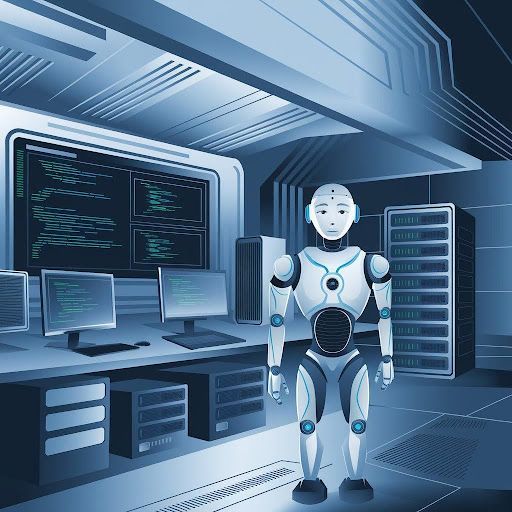
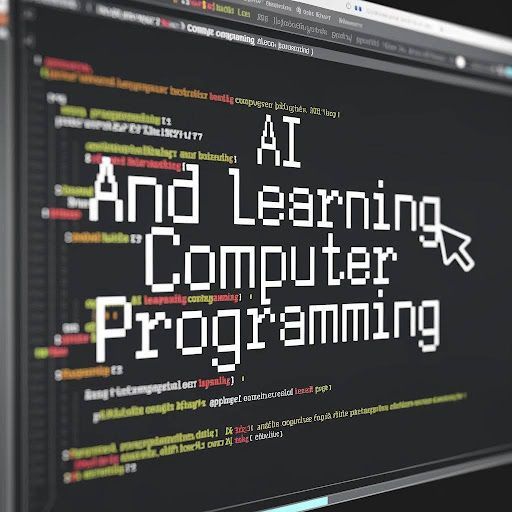
Images were created utilizing the website Ideogram.ai, a text to image AI tool
ChatGPT 3.5 created the title of this post

Jeremy is a TEDx Speaker and a high school Computer Science & History Teacher in Effingham, IL. He is also a governing board member of Illinois Digital Educators Alliance (IDEA). Jeremy has earned a Masters in Educational Policy from the University of Illinois and a Masters in Teaching from Greenville University. His goal is to inspire students, teachers and anyone he comes into contact with to be a lifelong learner. Jeremy believes education is the key to solving our world’s problems. In his free time, he enjoys traveling,writing, spending time in coffee shops, and spending time with his family watching old TV shows on Netflix.
RECENT ARTICLES