Cyber Monday: Pause Before You Click
IDEA Guiding Principles: GROW + SHARE
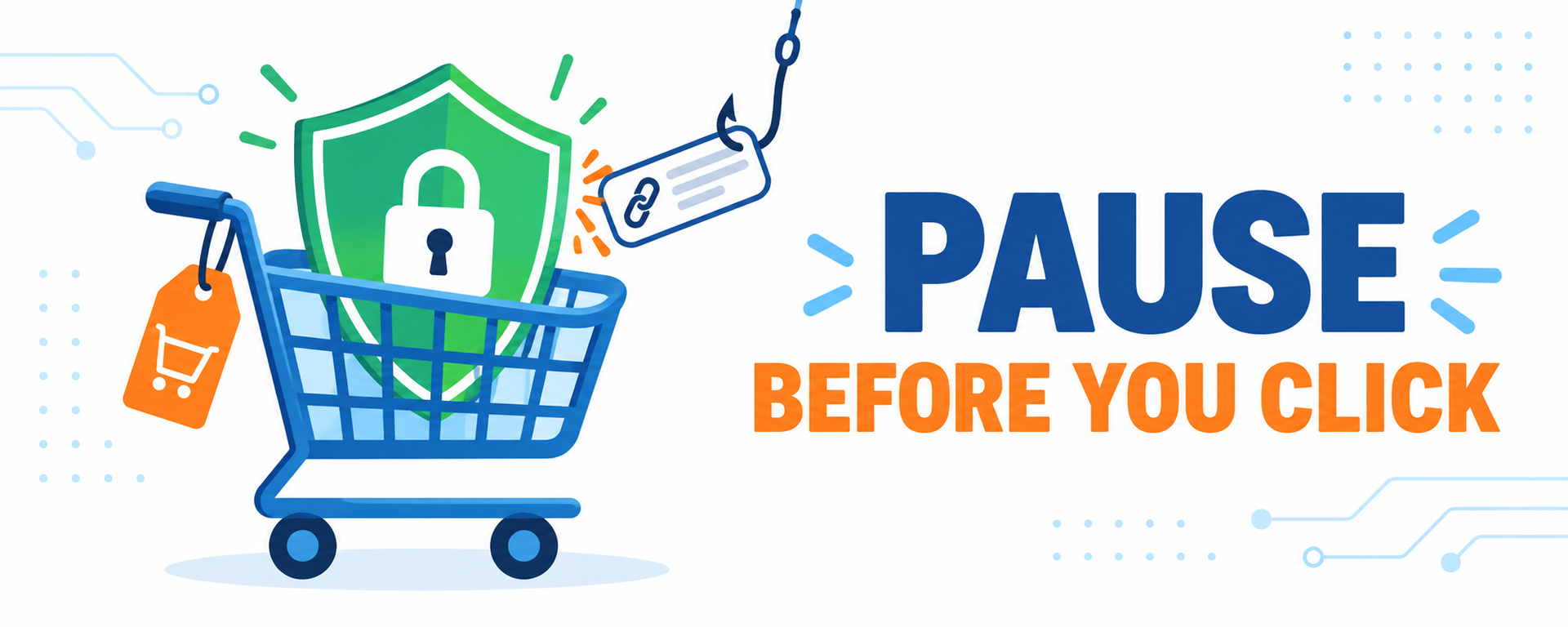
Cyber Monday, November 30, 2026 is built around speed. The deal is ending. The item is almost gone. The coupon expires in minutes. That urgency is also what makes the day useful for a conversation about cybersecurity. Before we click, educators should pause.
That pause matters for our personal information, but it also matters for the schools and communities that trust us. School accounts connect educators to email, documents, learning platforms, staff directories, student information, and other systems. A school email address should not automatically become a personal shopping account simply because it is convenient.
Follow Your School’s Guidelines
Every school and district has its own expectations for accounts, devices, passwords, approved applications, browser extensions, and personal use. Those guidelines are not designed to make technology harder to use. They help protect students, educators, and the entire school community.
Before using a school account or device for shopping, signing up for discounts, storing payment information, or creating an account with a new service, follow your district’s policies. When in doubt, use a personal account and personal device or ask your technology team.
Do not reuse your school password on shopping websites. Use multifactor authentication when it is available. Avoid saving personal payment information in a school-managed browser. Do not install an extension or application simply because it promises a discount. Most importantly, report a suspicious message or mistaken click quickly. Early reporting gives technology teams more time to protect people and systems.
Schools Are Being Targeted
This is not a theoretical concern. The 2025 CIS MS-ISAC K-12 Cybersecurity Report analyzed more than 5,000 K-12 organizations. It found that 82 percent of reporting schools experienced cyber threat impacts, with 14,000 security events and 9,300 confirmed incidents during the reporting period.
Recent stories show how quickly one compromised system can affect entire communities. In 2025, PowerSchool reported a major breach involving school data and later acknowledged paying a ransom. The information accessed varied by district but included sensitive student information such as addresses, birth dates, medical alerts, and meal-status data. Axios reported on the breach and subsequent extortion attempts. Here in Illinois, Evanston-Skokie School District 65 shared details about information compromised through the PowerSchool incident. The district’s public notice illustrates why cybersecurity is ultimately about people, not simply devices or networks.
In 2026, the Associated Press reported that a cyberattack disrupted Canvas for thousands of schools and universities, interfering with access to assignments, course materials, grades, and final exams. When an educational system is attacked, learning can stop and trusted information can become unavailable.
Shop Safely and Think Critically
The Federal Trade Commission’s holiday shopping guidance recommends researching unfamiliar sellers, questioning unusually low prices, paying by credit card when possible, and keeping purchase records. Scammers often impersonate real companies or create convincing advertisements that lead to fake websites.
This is also media literacy in action. A professional-looking message, familiar logo, or polished website is not proof that something is trustworthy. Visit a retailer through its official website instead of clicking an unexpected advertisement, email, or delivery message. Check the web address carefully and slow down when a message creates urgency.
These are exactly the kinds of habits educators can explore through IDEA’s Media Literacy Spotlight Community. Evaluating sources, questioning persuasive messages, and recognizing manipulation are essential skills for our students and for all of us.
Cybersecurity Is a Shared Responsibility
I do not want educators to be afraid of technology or feel blamed when something goes wrong. Cybersecurity works best when people feel comfortable asking questions and reporting concerns. Technology teams build protections, but every educator contributes by following school guidelines, protecting account credentials, using approved tools, and pausing before clicking. One thoughtful decision can protect far more than a shopping cart.
Cyber Monday lasts one day. Cyber safety is something we practice together throughout the year.
Share this story
RECENT ARTICLES