When Every Moment Can Become Content, Are There Any Safe Spaces Left?
IDEA Guiding Principles: CONNECT + GROW + SHARE
Students need places where they can ask unfinished questions, test ideas, make mistakes, and change their minds. Those moments are essential to learning, but they become harder when almost any conversation or action can be recorded, rewritten, shared, or judged by people who were never in the room. The concern is not only whether someone points a camera at a student’s desk. It also begins when an ordinary school moment leaves the room and becomes content later.
The Classroom Risk Starts Before Anyone Presses Record
A student says something awkward during class, makes a mistake at lunch, or does something embarrassing during recess. No one records it. Hours later, another student finally gets to Snapchat on the bus and turns the moment into a post. The original event may have been fleeting, but the retelling can travel farther, last longer, and reach an audience the student never expected.
The same thing can happen inside tools created for learning. In one example shared with us, a Google document that began as a place for history notes was shared among friends and gradually became a space for inappropriate comments about classmates. Those comments eventually reached the students being discussed. Nothing required a hidden camera. A familiar classroom tool became a channel for amplification.
That is the twofold concern schools must address: surveillance and amplification. Students may be captured directly, but they may also have their words, actions, images, or mistakes repeated and reshaped by someone else.
From Headlines to Always-On
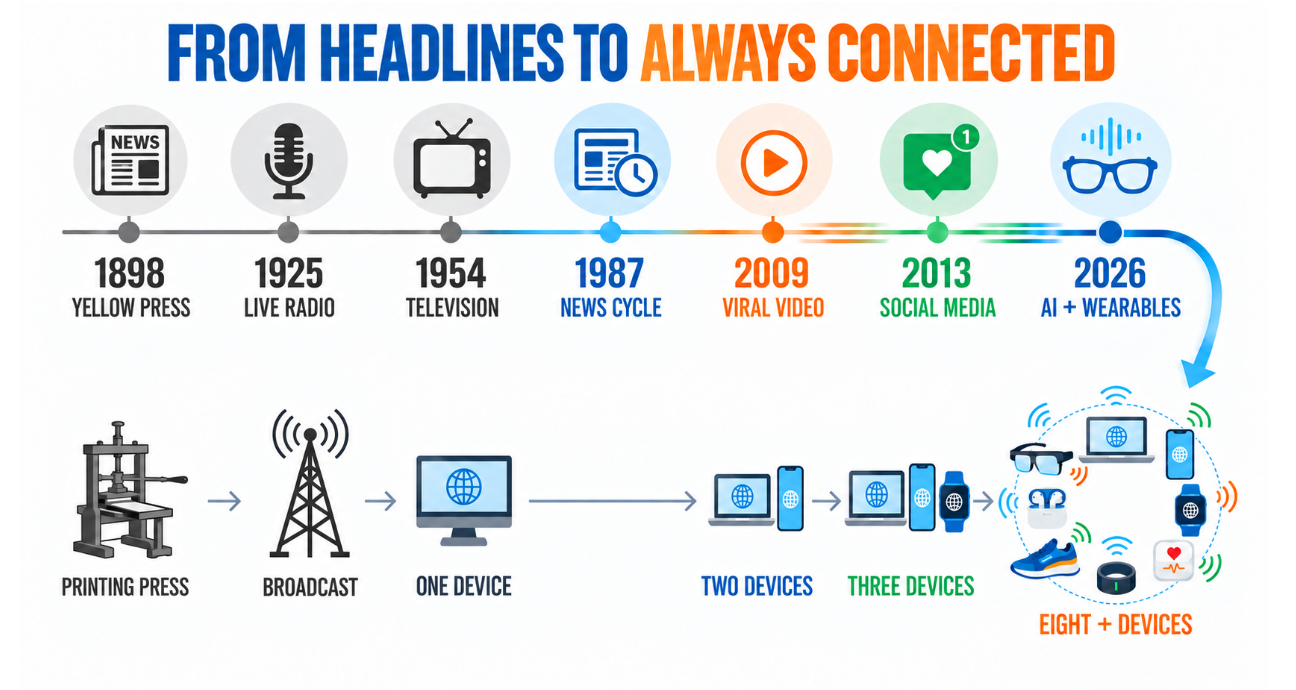
Public exposure is not new. What has changed is its speed, reach, and permanence. Yellow journalism influenced opinion through daily newspaper editions in the 1890s. The 1925 Scopes Trial became the first American trial broadcast live nationally. Television brought major public events into American homes, the internet shortened the cycle to hours, and social platforms made almost anyone capable of distributing a moment worldwide.
The consequences can follow someone for years. In October 2026, the Portland Trail Blazers dismissed a newly hired broadcaster after social media posts from his teenage years resurfaced. The content was harmful, and organizations have a responsibility to respond to it. The case also forces educators to confront a difficult question: How do we teach young people that actions have consequences while preserving the belief that they can learn, repair harm, and become more than their worst adolescent decisions?
Students need truthful guidance about permanence without being taught that every mistake makes growth impossible. They also need to understand that responsibility belongs both to the person who created the original harm and to anyone who later records, edits, republishes, or amplifies it.
Recording Is Becoming Part of the Environment
We once went online through one computer. Then many of us carried a computer and a phone. Smartwatches made it three. We are moving toward a world in which one person might use a phone, laptop, watch, glasses, earbuds, ring, connected shoes, and a health monitor. Personal AI recorders such as the Plaud NotePin can be worn as a clip, pin, necklace, or wristband while producing transcripts and summaries.
These tools can support memory, accessibility, organization, health, and communication. They can also make recording harder to recognize. Schools do not need a complete inventory of every camera and microphone to understand the challenge. Students are entering classrooms from a world in which capture, storage, interpretation, and sharing are increasingly built into the environment.
The Educational Cost of Surveillance and Amplification
Classrooms depend on trust. Students need to believe they can speak without every imperfect sentence becoming permanent content. Teachers need to facilitate difficult conversations without assuming that a short retelling or clip will be removed from its context. When students expect that anything could later become content, they may participate less, avoid uncertainty, or offer only the safest possible answer. The result may be quieter classrooms, but not necessarily deeper learning.
Device restrictions may reduce the likelihood that someone secretly records a classmate sitting at a desk. They cannot eliminate what happens after the bell. A remembered comment can become a post. A screenshot can escape a small group. A shared document can change purpose. An altered image can circulate before anyone sees the original. The risk is not only constant surveillance. It is the speed with which a moment can be amplified.
Students need room to be unfinished. Kids will be kids, but that cannot mean ignoring harm. A student can accept responsibility, repair damage, and make better choices without becoming permanently defined by one moment. The student who says the hurtful or foolish thing needs guidance, and so does the student who decides to capture, embellish, or share it.
Wearables make these boundaries harder to recognize because cameras and microphones may be embedded in glasses, earbuds, watches, pins, jewelry, and clothing. Health and accessibility devices can also collect deeply personal information without looking like traditional recording tools. Expectations must therefore focus on behavior, consent, purpose, and impact rather than a list of devices.
Protecting the Conditions for Learning
Schools cannot guarantee that every classroom moment will remain private, but they can create clearer expectations about recording, describing, editing, and sharing what happens to others. Students should understand that meaningful consent matters, that a learning tool can become harmful when its purpose changes, and that forwarding content is a decision with consequences.
Schools can also create ways for students to report harmful content, seek help, repair damage, and learn from mistakes. Responses should distinguish accountability from public humiliation. The goal is not to shield students from consequences. It is to keep consequences connected to learning, restoration, safety, and growth.
Students should help shape these expectations because they often see forms of capture and amplification before adults do. Their experiences can reveal how private jokes, collaborative documents, group messages, screenshots, altered images, and social posts move through a school community. Listening to students can help schools address real behavior rather than yesterday’s list of prohibited apps.
Media Literacy Must Include Privacy
Media literacy has traditionally included evaluating sources, recognizing bias, identifying misinformation, and creating responsibly. Those skills remain essential, but students also need privacy literacy. They need to understand when information is being collected, how context can be lost, who can access or alter content, what happens when they amplify it, and how to protect their own dignity and the dignity of others.
A Media Literacy Now report developed with the Massachusetts Department of Elementary and Secondary Education supports media literacy that begins early, continues across grade levels, and is integrated throughout subject areas. The Pause2MAP framework from the Media Education Lab offers a practical habit: Pause, Manage, Analyze, and Participate. Before reacting or sharing, students can ask what they know, what may be missing, who could be affected, and whether their participation improves the situation.
The student-produced STUDENTS FIRST Act demonstrates why students should help schools examine how AI affects learning, relationships, privacy, and trust. Students should not simply receive rules written about them. Their experiences should inform those rules.
This is also an important conversation for IDEA to continue with Greg Alkalay and ClassIQ. Social media influencers understand how quickly words and images can be manipulated, misconstrued, and used against the person who created them. Their experience can help students examine how personal expression, influence, judgment, and responsibility intersect online.
The goal is not to frighten students away from media or emerging technology. It is to help them understand the power they hold whenever they record, describe, edit, interpret, or share. When students learn to protect context, seek consent, resist harmful amplification, and leave room for people to grow, privacy literacy becomes more than a defensive skill. It becomes part of building healthier classrooms and communities.
Share this story
RECENT ARTICLES