Great Work in Illinois: Juliano Saccomani Opens His Classroom to the Portuguese-Speaking World
IDEA Guiding Principles: CONNECT + GROW + SHARE + INSPIRE
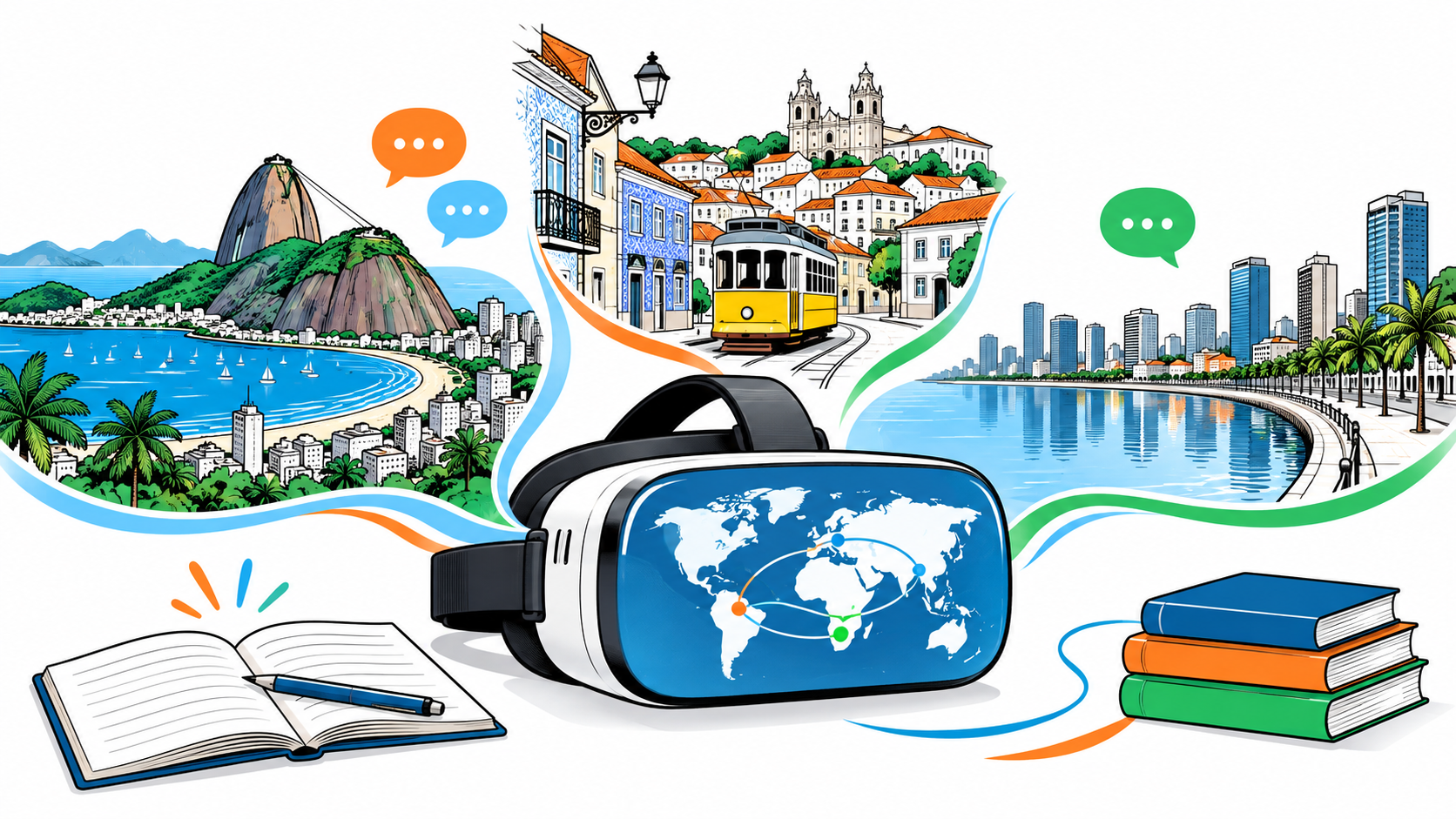
Great education stories continue to take shape across Illinois because educators bring curiosity, care, and persistence to their work. At the University of Chicago, Assistant Instructional Professor Juliano Saccomani is helping students explore the Portuguese-speaking world through virtual reality. His project allows students to experience scenes from Brazil, Angola, and Portugal without leaving the classroom. Using immersive video, including footage he records himself, Juliano creates opportunities for learners to observe everyday life and connect those discoveries to conversations about language, history, and culture.
More Than Putting on a Headset
The strength of this experience is not simply the technology. Juliano carefully prepares students with historical, geographic, social, and economic context before they enter a virtual environment. Once immersed, students have the freedom to decide what deserves their attention. One student might focus on a landmark. Another might notice how people interact, how children play, or how an ordinary exchange unfolds on the street. Those different observations become material for reflection, discussion, and language learning.
In his description of the project, Juliano explains that students are not passive visitors. The educator establishes a foundation and creates the experience, but students must make connections and determine what the environment means to them.
That balance between thoughtful preparation and student choice connects naturally with IDEA’s Learner Agency and Modern Teaching, Meaningful Assessment Spotlight Communities. Students receive the support they need without having every observation or conclusion selected for them.
Research Supports Purposeful Immersion
Recent Illinois work reinforces the value of placing learning goals ahead of the technology. A 2026 University of Illinois Urbana-Champaign study compared virtual reality instruction with slide-based instruction in construction education. Students using VR demonstrated greater knowledge gains, with particularly strong benefits for learners who did not regularly use virtual reality.
The subject matter was different, but the lesson is relevant. Immersion can become instructionally meaningful when it is connected to clear objectives, purposeful decisions, and opportunities to apply what students notice.
Another recent University of Illinois story describes students using 360-degree video, virtual reality, and international collaboration to examine food and culture in Mexico and Taiwan. Educators involved in the course emphasized that the purpose was not simply to introduce new technology. It was to expand access to global learning, challenge assumptions, and help students develop cultural understanding.
Juliano’s approach reflects that same principle. The headset does not replace instruction, discussion, or reflection. It gives students another way to encounter the people, places, and cultural contexts connected to the language they are studying.
Six Years of Learning and Persistence
These classroom experiences begin long before students put on the equipment. Photographs provided for this story show students exploring with headsets and Juliano collecting immersive footage near Sugarloaf Mountain in Rio de Janeiro.
In correspondence shared for this story, Juliano described approximately six years of developing the project, studying the results, and learning from setbacks.
“The VR project has been going on for around six years now,” he wrote. “We have had some great positive results, and some negative ones that we took as learning opportunities. This is natural of any research project. We keep going.”
That willingness to continue is an important part of the story. Meaningful innovation rarely arrives fully formed. Educators try an idea, observe students, confront limitations, revise the experience, and return with a clearer understanding of what learners need.
Juliano received a 2025 MAFLT LCTL Innovation Award for this work. He shared that the recognition helped demonstrate to his institution that the project deserved continued investment. Support and recognition matter because sustained instructional work requires time, resources, trust, and opportunities to grow.
An Illinois Story Worth Sharing
Juliano also wants other educators to benefit from what he has learned. He welcomes collaboration with people working in different settings and hopes to help them consider what might be possible within their own classrooms and resources.
“I truly believe that we are stronger when we share our voices and projects,” he wrote.
That belief reflects the kind of educator connection IDEA hopes to encourage across Illinois. Our state’s educators have ideas worth sharing, lessons learned through revision, and experiences that can help colleagues imagine new possibilities.
Primary source: Using Virtual Reality to Promote Cultural Learning in the Classroom, published May 19, 2025. Additional material comes from correspondence and photographs provided for this story. Follow the University of Chicago Portuguese program on Instagram.
Share this story
RECENT ARTICLES