Preparing Students for the World We Actually Created
IDEA Guiding Principles: CONNECT + GROW + SHARE + INSPIRE
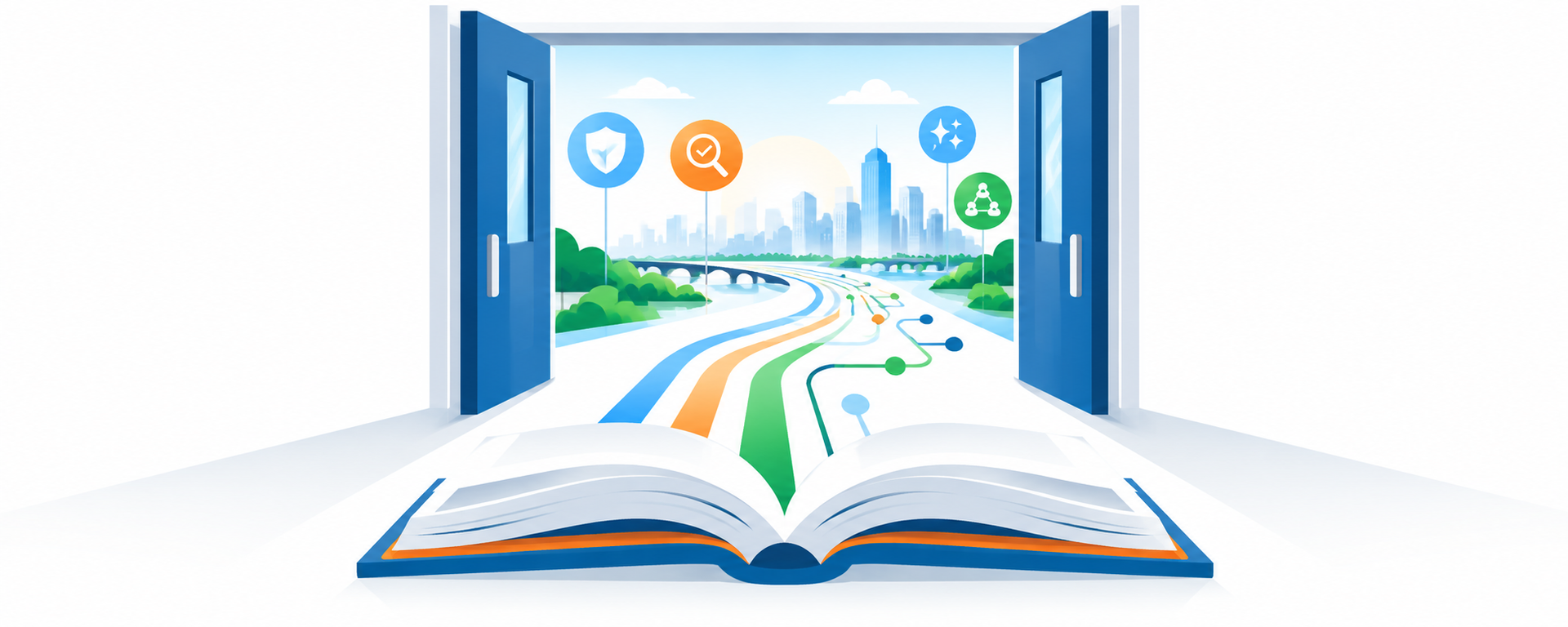
A sentence from Mat Honan’s “Generation AI” essay in MIT Technology Review stopped me: “We have to prepare our children to live in the actual world we have actually created, not the one we wish we had.”
I agree. Schools cannot prepare students for a world that no longer exists. Artificial intelligence, social media, algorithms, and connected devices are already shaping how young people learn, communicate, create, and understand the world. We may have serious concerns about these technologies, but those concerns make education more important, not less.
Avoidance Is Not Preparation
This is not an argument for putting more screens in front of students or adopting every new tool. Schools should protect student privacy, reduce unnecessary distractions, preserve human relationships, and decide carefully when technology adds value. There is an important difference between unrestricted technology use and intentional learning guided by a trusted adult.
Removing a tool may reduce an immediate risk, but removal alone does not teach students how to recognize misinformation, question an AI-generated answer, protect personal information, understand bias, or decide when technology should not be used. Students will face these decisions outside school, with or without our preparation.
Preparation Can Make a Difference
Students do not automatically become responsible technology users simply because they grow up surrounded by it. These skills must be taught, and research suggests that even focused instruction can make a difference.
A 2026 controlled classroom study found that middle school students who completed a two-hour AI literacy workshop relied less uncritically on AI. They asked better follow-up questions, revised their prompts, and evaluated responses more accurately. The lesson is encouraging. We do not need to know everything about AI before helping students. We need structured opportunities for them to question, test, verify, and reflect with trusted adults beside them.
Students Are Already Using AI
The world Honan describes is not approaching. It is already here. College Board research published in 2025 found that 84 percent of high school students reported using generative AI for schoolwork. The same research found that many schools still lacked consistent policies and guidance.
When students have access to powerful tools but little instruction, they are left to develop their own rules. Some will use AI thoughtfully. Others may accept inaccurate information, surrender important thinking, expose personal data, or use the technology in ways that undermine their learning. Students need more than access or restriction. They need preparation.
Illinois Educators Are Navigating This Too
A University of Illinois statewide survey found that 68 percent of participating Illinois teachers had used AI in their classrooms during the previous year. Educators reported using it for lesson planning, feedback, differentiated learning, and support for students with special education needs.
They also expressed real concerns. Ninety percent worried that AI could reduce students’ critical thinking, while more than half raised concerns about privacy, surveillance, copyright, bias, and equity. These findings should not push us toward uncritical adoption or complete rejection. They should push us toward better professional learning, clearer expectations, and honest conversations grounded in classroom experience.
What Preparation Looks Like
A 2025 ETS framework for K-12 AI literacy identifies critical evaluation, ethical decision-making, practical understanding, and responsible collaboration as essential skills.
Preparing students means teaching them to ask better questions. Who created this information? What evidence supports it? What might be missing? What information am I sharing? Did the technology strengthen my thinking or replace it? When should I stop and ask a person for help?
Responsible use cannot be learned only through warnings. Students need guided practice, appropriate boundaries, and meaningful opportunities to use technology for creation, investigation, collaboration, and problem-solving.
This Is Where IDEA Fits
IDEA’s role is not to promote technology for its own sake. Our role is to connect educators so they can make better decisions together.
Through IDEA’s Media Literacy Spotlight Community, educators can help students evaluate information and recognize manipulation. Through Teaching in the Age of AI, educators can examine how AI affects learning, assessment, creativity, academic integrity, privacy, and student agency.
The worst outcome is not simply that students encounter powerful technology. It is that they encounter it without guidance, boundaries, support, or trusted adults.
Our responsibility is not to recreate the world in which we grew up.
It is to help students become thoughtful, capable,
ethical, and resilient participants in the world they are inheriting.
That requires protection and preparation. Our students need both.
RECENT ARTICLES