Teaching Tomorrow’s Innovators: Ethical Dilemmas in Technology
As a STEM & Computers teacher, the new developments in technology are super exciting! It's also a bit like a maze, full of twists and turns, new innovations, and responsibilities to share these technologies with students not knowing the future implications. We struggle with the question: “Is all this amazing innovation for the better or does it bring future unforeseen challenges?”
Now, let's explore how Mary Shelley’s
Frankenstein, George Orwell’s
1984, and Ray Bradbury’s
Fahrenheit 451 share in the concept of ethics and technology innovation.
Mary Shelley’s Frankenstein: Responsibility
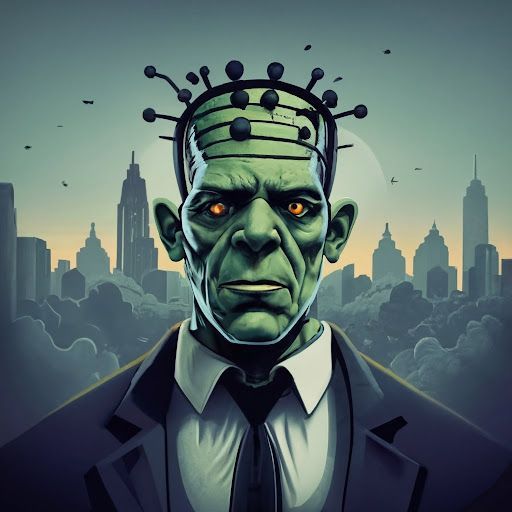
Dr. Frankenstein, motivated by his curiosity, creates life. Shelley's tale reminds us that innovation without ethical responsibility will lead to negative consequences. While Shelley couldn’t have predicted the technologies we possess today, she understood that it could be a double-edged sword. AI, virtual worlds, genetic engineering and a multitude of tech developments can enhance life, but we need to handle them with care, understanding the ethical impact of our creations.
George Orwell’s 1984: Real vs. Digital Connection

Orwell paints a picture of a world where technology keeps us "connected" but actually isolates us. In
1984, the government’s surveillance technology invades people’s privacy, stripping away their humanity. We’re living this right now as companies are collecting and using our data, often with our permission due to agreeing with “Terms of Service.” Social media and our devices suck our attention at home and sometimes even when we gather around other people. Sure, tech connects us online and provides many opportunities to save time and money, but nothing beats face-to-face gatherings.
Ray Bradbury’s Fahrenheit 451: When Tech Controls
Bradbury’s novel delves into a world where technology, like interactive games, controls even personal relationships. In the case of Montague and his wife, she becomes consumed with an interactive television program; she has no idea what is going on in her husband’s life or the world around her. It's a cautionary tale that hits close to home. Tech should empower us, not dominate our every move.
Our Responsibility as Teachers
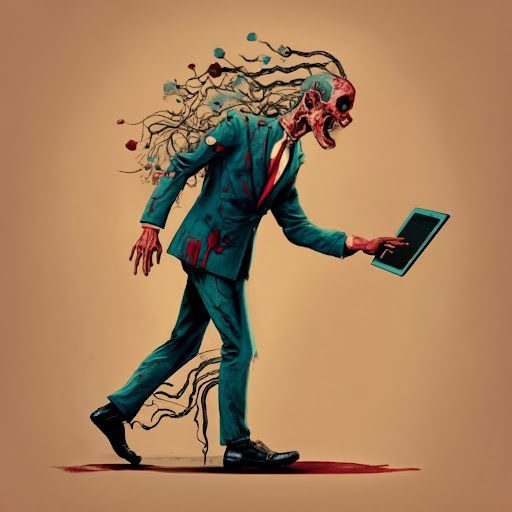
So, what's our role in all of this? As educators shaping the minds of future innovators. We must instill the understanding that tremendous power demands monumental responsibility. It's our duty to educate students about the ethical development and responsible use of emerging technologies. We should inspire them to craft innovative and practical devices while encouraging them to contemplate the lasting impact their creations may have on the future.
Notes:
**Images were created utilizing the website Ideogram.ai, a text to image AI tool.
**ChatGPT 3.5 was used to improve the wording of my original thoughts.
**ChatGPT 3.5 was also used to analyze and summarize the following scholarly writings:
Using Literature to Teach about Technology and Social Manipulation in Society
A modern ‘Frankenstein’: University of Calgary researchers explore ethics of AI
The Guardian view on the ethics of AI: it’s about Dr Frankenstein, not his monster
Why 2023 Is Unveiling The Unsettling Reality Of Orwell’s 1984
Orwell Versus Huxley: Economics, Technology, Privacy, and Satire
Ray Bradbury’s Fahrenheit 451: Authentic Future Dystopia
The Internet is a Loaded Gun: Ray Bradbury’s Prophetic View of Digital Literacy

Jeremy is a TEDx Speaker and a Jr. High Computers & STEM Teacher in Effingham, IL. He has earned a Masters in Educational Policy from the University of Illinois and a Masters in Teaching from Greenville University. His goal is to inspire students, teachers and anyone he comes into contact with to be a lifelong learner. Jeremy believes education is the key to solving our world’s problems. In his free time, Jeremy enjoys traveling,writing, spending time in coffee shops, and spending time with his family watching old TV shows on Netflix.
RECENT ARTICLES