How Can Fiction Help Kids Make Sense of the Age of Influence? by Victoria J. Coe
IDEA Guiding Principles: GROW + INSPIRE
Every time I visit a school, I’m treated like a rock star. Kids ask for autographs, crowd around for photos, and sooner or later someone asks the question I’ve learned to expect: “Can I be on your website?” Or, even better: “Can I be in your Instagram dance reel?”
They want to be famous.
Not every kid, of course. But enough of them that I’ve started to notice. And even kids who aren’t on social media are watching YouTube—a lot of it. Fame isn’t some distant fantasy for this generation, something reserved for movie stars and professional athletes. It’s something a kid can try on after school, with a phone, a good idea, and a willingness to hit “post.”
Sometimes they want to be famous for singing or dancing. Sometimes it’s gaming or sports or making funny videos. Sometimes they just want people to know who they are.
And I’ve been thinking about that a lot.
Because it turns out I wrote a book that lands right in the middle of this world. Funny thing is, I didn’t plan to.
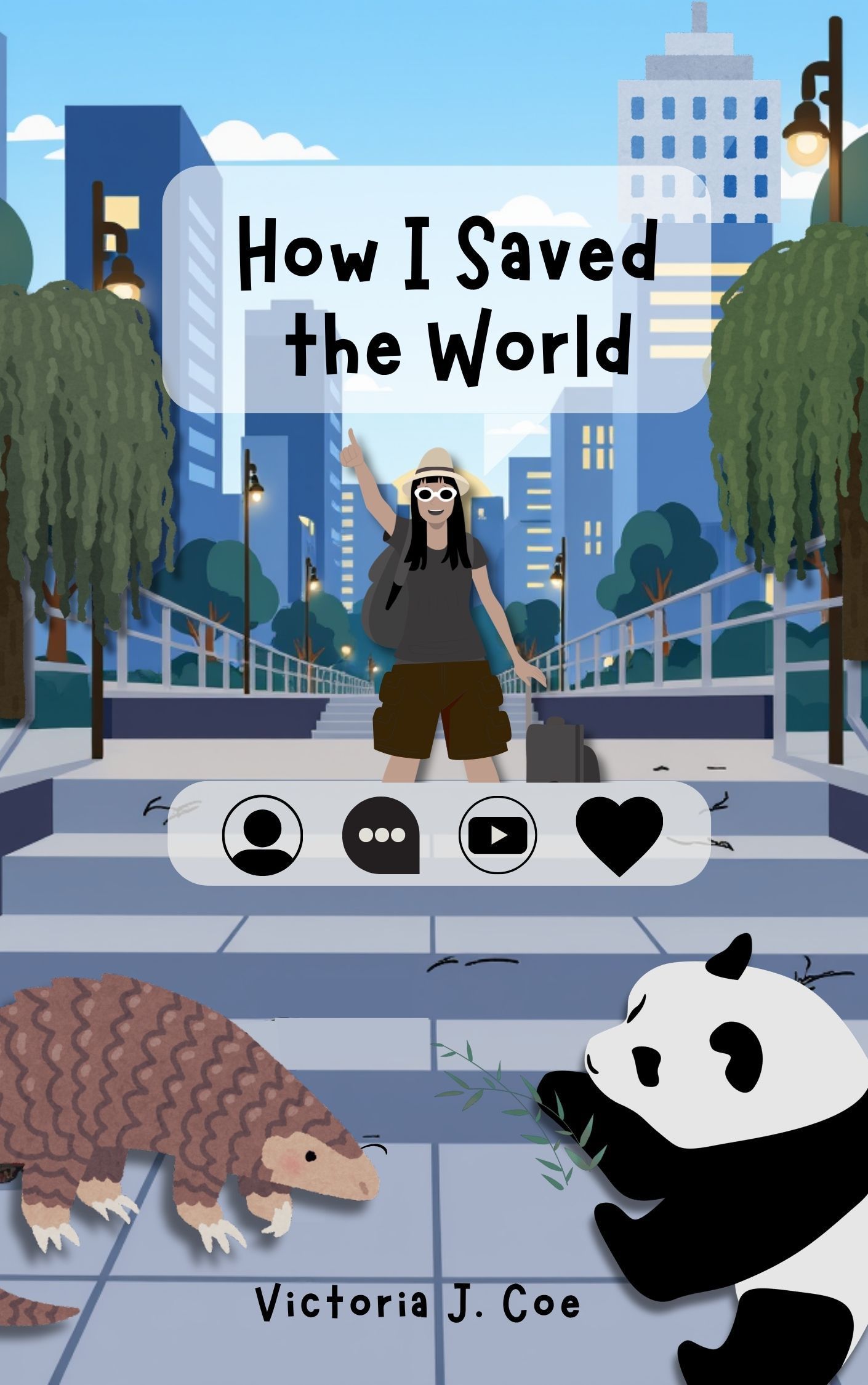
When I started How I Saved the World, I just wanted to write the kind of book I’d want to read: a compelling character, an exciting plot, pages that practically turn themselves. I threw in things I love—New York City, clues and puzzles, a high-stakes chase. And I created a main character who genuinely wants to save the world.
Twelve-year-old Eleanor Fox is the star of her family’s hugely successful YouTube channel. Her videos about endangered animals attract millions of views, and every time one hits a million, the family’s corporate sponsor donates big money to wildlife conservation.
Eleanor has grown up on camera. She knows how to perform, how to connect with an audience, and how to make a video people want to watch. She also believes deeply in what she’s doing.
But what happens when being seen becomes part of who you are?
That question turned out to be much more interesting to me than any simple question of whether social media is “good” or “bad.”
Because there really isn’t an easy answer.
Kids are growing up in a world where being watched, liked, followed, shared, and commented on is increasingly normal. They see children their own age becoming influencers. They see kids making money from their bedrooms. They watch family channels where ordinary moments become content. They see people turn their lives into brands—and sometimes they want to do the same.
At the same time, adults are having very different conversations about all of this. We worry about screen time. Privacy. Safety. Oversharing. The pressure to perform. The possibility that children are learning to see themselves through an audience’s eyes.
Those are important conversations.
But children are having their own conversations, too.
They’re wondering what makes someone interesting. Why some videos go viral and others tank. Whether having lots of followers means someone is important. Whether a person can be famous and still be authentic. Whether you can change your mind when thousands of people already know you for being one particular kind of person.
And sometimes they’re simply wondering: What would it feel like if everyone knew who I was?
That’s where fiction can do something that a warning or lecture can’t.
When I created the character Eleanor Fox, I didn’t want to tell young readers what to think about social media or child influencers. I wanted to let them spend time inside the world and figure out what they thought for themselves.
So I gave the other characters their own complicated relationships with influencer culture, too. The villain has one reason for wanting the attention that comes with fame. The mysterious sidekick has another. Eleanor has yet another.
Nobody gets to be the spokesperson for the “right” answer.
My job was to stay true to the characters: what they want, what drives them, what they’re afraid of, and what stands in their way. I tried to be fair because, honestly, my own feelings about kids and social media—and especially kids starring on their parents’ channels—are complicated.
I have questions. I suspect a lot of parents, educators, and librarians do, too.
But I didn’t have an agenda when I wrote the book, and I still don’t.
What I do believe is that stories give us a place to have
conversations that can be difficult to start in real life.
A child might not want to sit down for a serious discussion about influencer culture. But they might have a lot to say about Eleanor.
They might argue that she’s lucky. Or that her parents are asking too much of her. They might admire what she’s doing for endangered animals. They might wonder whether she really gets to choose what happens to her image. They might think the villain has a point. They might completely disagree with each other.
Good.
That’s a conversation.
Stories are safe spaces for trying on perspectives that aren’t our own. Readers can make mistakes, change their minds, root for the wrong person, rethink a character, and close the book with more questions than answers.
For children growing up in a world shaped by social media, that space may be more valuable than ever.
Because kids aren’t going to stop being curious about fame. They aren’t going to stop watching YouTube. They aren’t going to stop wondering what it would be like to have millions of people know their name.
And maybe they shouldn’t.
Wanting to be seen is hardly a new human desire. What’s different is how accessible an audience has become—and how young some children are when they begin thinking about themselves as performers, creators, or brands.
That doesn’t mean we need to panic.
It means we need to talk.
And sometimes the best way into that conversation is through a story.
So the next time a student tells you they want to be famous, maybe don’t sigh.
Ask why.
Then hand them a book.
Victoria J. Coe is the author of numerous books for children, including the Fenway and Hattie series, a One School, One Book favorite, Amazon Teachers’ Pick, and early reader selection for the Global Read Aloud, and the Make Way for Fenway! chapter book series, which won the SCBWI Sid Fleischman Honor Award for Humor. A dynamic presenter and workshop leader, she has spent more than a decade visiting elementary schools and talking with children about reading, writing, and storytelling. Her latest middle grade novel, How I Saved the World, is out now.
Connect with her at victoriajcoe.com, or on Instagram:
Victoriajcoe.com |
instagram.com/victoriajcoe |
YouTube
RECENT ARTICLES