Will Students Get Caught? A Prelude to What is Coming!
IDEA Guiding Principles: CONNECT + GROW + SHARE + INSPIRE
The difficult truth is that our current arguments about phones,
social media, AI, and screen time are only a prelude to what is coming.
It is unreasonable, and frankly ridiculous, to blame schools whenever students misuse technologies that society has rapidly designed, marketed, and placed into their hands. Schools did not create wearable cameras, AI assistants, remote-monitoring systems, social platforms, or brain-computer interfaces. Educators are dealing with distraction, cyberbullying, AI-generated assignments, and the expectation that schools should manage every consequence of technology use. Yet educators are expected to manage the consequences?
Of course there is a technology backlash. Parents are frustrated by screen time, social media, online safety, artificial intelligence. Students are also caught in the middle. They may receive a phone from their parents for safety and then get in trouble for using it at school. They may be encouraged to learn about AI while being disciplined for using it on the wrong assignment. At home, the same technology may be restricted as a consequence.
Common Sense Media research on young people and AI
found that many children are already using AI
while nearly half have never had a conversation with their parents about AI safety.
What Happens When the Screen Disappears?
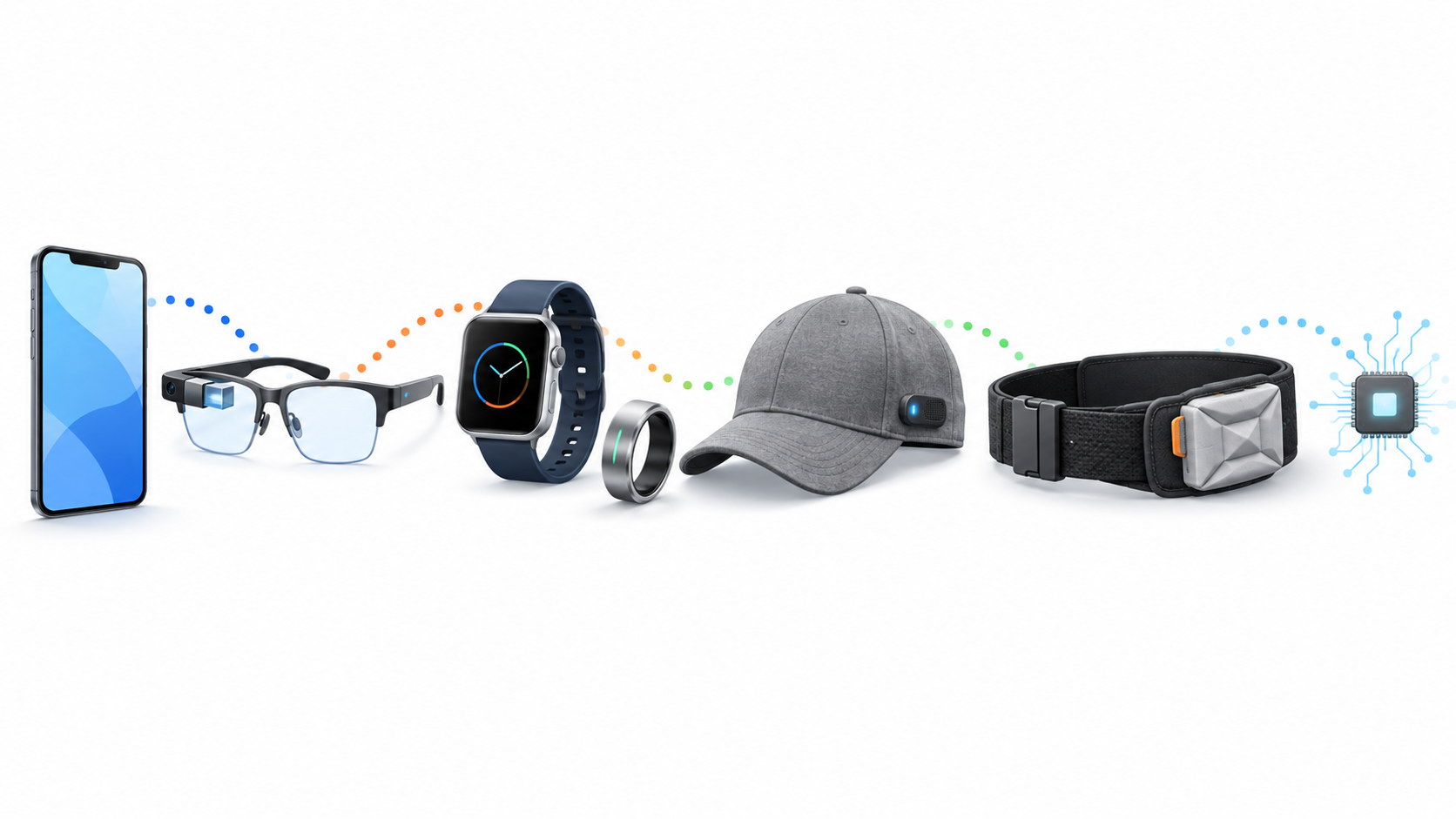
Most of today’s technology backlash focuses on a visible screen. We can see a student holding a phone, scrolling through social media, or typing into an AI chatbot. Wearables change that assumption. OMNIVISION develops extremely small cameras and sensing technologies for medical devices, automobiles, mobile products, and other applications. As these components shrink, technology will increasingly disappear into glasses, rings, headphones, clothing, hats, and implanted devices. A student may not need to look at a screen to record a conversation, ask an AI assistant a question, translate language, monitor health information, or generate a response. If our only response is to remove the visible device, we will be unprepared when the interface is no longer visible.
This is already happening. A proposed pilot involving Meta smart glasses and visually impaired users in Gujarat, India demonstrated the tension between accessibility and privacy. The glasses may help someone navigate the world while also collecting information about bystanders who may not realize they are being recorded. And of course Students have reportedly been caught using AI-enabled glasses during examinations. As a result, our definitions and vocabulary must shift from naming particular devices to describing the assistance a student received just as we need to redefine the problems of technology to be associated with the behavior instead of the tech itself.
Did the technology organize ideas, translate language,
provide feedback, generate an outline, compose a response, or complete the thinking?
We also need to rethink assessment. If AI assistance can come through a computer, phone, pair of glasses, or hat, controlling the device will not tell us what a student understands. Educators will need multiple ways for students to demonstrate learning through conversation, creation, explanation, revision, performance, and the application of knowledge.
This is part of the thinking behind the Jon Bergmann and IDEA Illinois course on teaching in the age of AI. The goal is not simply to catch students using AI. It is to design learning experiences in which students remain responsible for thinking, making decisions, and demonstrating what they know.
Safety and Connection Will Look Different
Many parents wanted their children to carry phones at school because those devices provided a direct connection during emergencies, transportation changes, and after-school activities. Wearables will change what that connection can look like.
A watch, ring, patch, or item of clothing may communicate location while collecting information about movement, sleep, stress, heart rate, heart rhythm indicators, glucose, temperature, and other measurements. Parents may increasingly receive alerts or review information about their children from miles away.
The American Academy of Pediatrics has examined remote monitoring involving wearable sensors, implanted monitors, smartphones, and other personal health technologies. Research is also exploring whether wearable heart-rate information can provide useful indicators of pediatric metabolic health.
These capabilities may be tremendously valuable for children with diabetes, heart conditions, anxiety, epilepsy, disabilities, or other health needs. However, consumer wearables are not all medical-grade devices, and their readings should not automatically be treated as diagnoses.
Remote monitoring also raises questions. When does safety become constant surveillance? Who receives an alert? What information should a school be expected to monitor? Can students turn the device off? Could the information later be used for discipline, advertising, insurance, or decisions unrelated to the child’s health? The same parents who once said, “I need my child to have a phone so I can reach them,” may soon say, “I need my child to wear this because I need to know they are safe.”
From Monitoring to Taking Action
Wearables can already detect falls and notify family members or emergency services. The next phase will not simply observe what happens. Devices may anticipate danger, respond immediately, and physically protect the person wearing them. Wearable airbags provide an early example. These devices use motion sensors to identify a serious fall and deploy protection around the hips before impact. Instead of only sending an alert after someone falls, the wearable acts during the event. Future devices may detect an asthma concern, unusual heart rhythm, dangerous glucose change, or concussion risk. They may contact a caregiver, share relevant information, and begin responding before a parent, educator, coach, or medical professional can intervene. JubileeTV is not a wearable, but it demonstrates how families are thinking about remote support. It turns a familiar television into a communication and caregiving hub. Approved family members can provide assistance, start video calls, send reminders, and receive information when routines change.
The connection between JubileeTV and wearable airbags is the shift from waiting for someone to request help toward recognizing when support may be needed and responding from afar. As this thinking moves into wearable technology, support may become more immediate and personal.
One Company, Three Glimpses of What Comes Next
Greyer, WAGA, and Sabi come from the same broader company and team. Together, they demonstrate a possible progression for wearable AI. Greyer allows someone to press a button, speak naturally, and later receive organized transcripts, reminders, drafts, and suggested actions. WAGA expands the idea through an AI assistant named Alia that can connect with services such as Google, Notion, email, and calendars. The WAGA student page uses the phrase “AI does the homework” and describes turning conversations into study plans or ready drafts. If a student’s hat can record ideas, remember an assignment, organize information, and prepare a draft, where does assistance end and substitution begin? Sabi points toward a more ambitious future. The company is developing a brain-computer interface inside a beanie and says its neuroimaging sensors are intended to interpret brain signals and attempted speech. These remain emerging company claims, but the direction matters.
The interface is moving from the screen, to clothing, and potentially closer to the brain.
Accessibility Is Driving New Interfaces
Neurable integrates noninvasive brain-computer interface technology into headphones. Augmental created the MouthPad, which allows users to control devices through tongue, head, and breath movements. Lumen is developing glasses that use AI and haptic feedback to help people who are blind navigate their surroundings. Oura places health sensing inside a ring.
These technologies demonstrate how designing for accessibility, independence, and wellness can produce entirely new interfaces. They are not simply products schools should purchase or prohibit. They are signals educators should study because they change what access, assistance, privacy, and independent work might mean.
Jony Ive’s io team has merged with OpenAI to develop a new generation of AI hardware. OpenAI has not confirmed that its first device will be wearable, but the collaboration signals movement toward personal AI that may rely less on traditional screens and keyboards. The next stage may not be something students wear at all. Neuralink is developing a fully implanted, wireless brain-computer interface. Its PRIME Study is evaluating an investigational implant designed to help people with paralysis control external devices through neural activity.
This work should first be understood through its potential to improve autonomy and accessibility. It is not a classroom consumer product. Still, it raises questions education cannot ignore. Can a school restrict a medically necessary interface? Who owns information generated from neural activity? How will educators distinguish accessibility support from unauthorized assistance?
Illinois Must Be Part of the Conversation
The University of Illinois Urbana-Champaign’s Center for Wearable Intelligent Technologies brings researchers together around wearable sensing, health, robotics, and human-machine interaction. University of Chicago researchers have explored how a wrist-mounted camera and tactile feedback can expand access for people who are blind or have low vision. The University of Illinois Chicago has showcased wearable technology designed to assist children experiencing anxiety. Illinois companies including Rhaeos and Hourglass Medical are also exploring wearable health technology.
Education Must Be Part of the Response
Banning every emerging device may provide temporary clarity, but it will not prepare students for life after graduation. Unrestricted access is not the answer either. Students need guided opportunities to examine how wearable technologies work, what information they collect, and when their use affects other people. They need to understand consent, privacy, bias, accessibility, cybersecurity, health claims, and the difference between assistance and substitution.
As I wrote in Preparing Students for the World We Actually Created, our responsibility is not to prepare students for the world we wish existed. It is to help them navigate the one already taking shape. IDEA’s Wearable Technology and Learning Spotlight Community can create space for these conversations. Educators need opportunities to see emerging tools, question developers, share classroom experiences, and shape responsible expectations before the next device arrives.
The phone controversy is not the end of the technology debate. It is practice for the more complicated questions ahead.
Wearables are moving faster than our rules. Preparing schools for that world must begin before it arrives.
RECENT ARTICLES