The Difficult AI to Put Away
For Years, schools have been asked to adapt to one disruptive technology after another.
Chalk. The Pencil. Markerboards. Computer Labs. Laptops. Smartphones. Smartwatches. AI Wearables?
Schools have responded to each with policies, restrictions, and rules. But all shared one assumption:
The technology is fairly easy to spot and or put away. That is about to change.
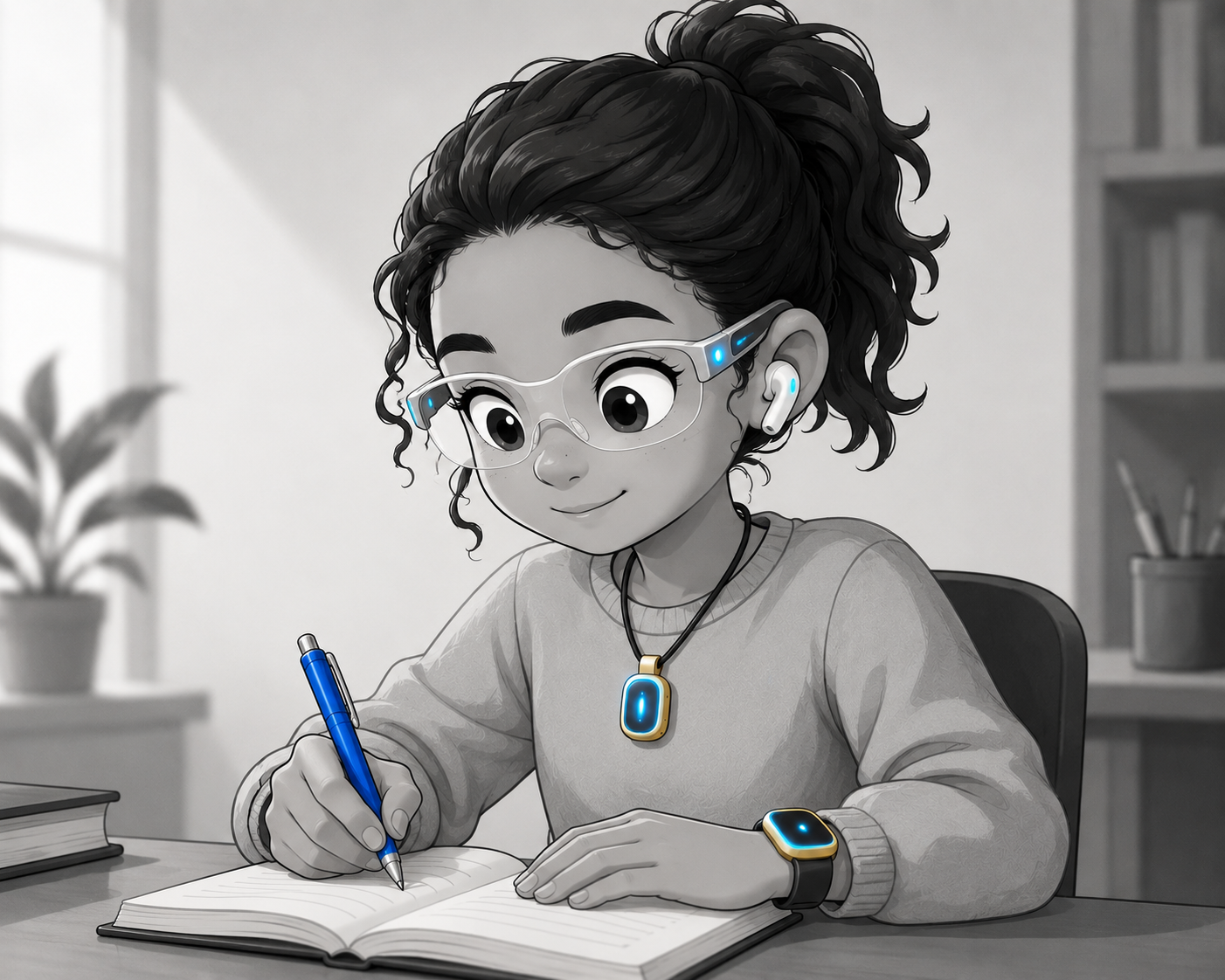
Students are wearing AI-powered glasses, earbuds, pendants, watches, rings, or even clothing—providing instant access to tutoring, answers, translation, writing support, and of course social media and gaming even more.
These devices already exist. As a School Principal, I personally witnessed several very unique conversations for and against wearable technologies. This is not as easy a conversation to just ban as one thinks.
What happens when every student can walk into school with an AI assistant that never leaves their side? If it is assigned in their IEP? Classmates have these assigned to their IEP?
This is bigger than cheating.
How do we rethink assignments and assessments? What happens to attention, privacy, security, and accountability? Will banning wearables even work when they are almost invisible? Create more legislation and policies as the technology becomes smaller and harder to detect? Or do we rethink learning? Rethink assessment?
Perhaps the question isn’t how do we stop students from using AI?
Perhaps it’s how do we design education when AI is always available?
At IDEA Illinois, we believe educators need to wrestle with this now—not five years from now.
If every learner walks into school wearing AI, what must education become?
- Gallup — Most Teachers Receive No Formal Guidance on AI Use
Only 18% of K–12 teachers report receiving formal AI guidance, highlighting how quickly technology is outpacing school policies and expectations. - Brookings — AI Is Rapidly Changing Education and Research Needs to Keep Up
AI is evolving faster than traditional education research, requiring schools to develop faster ways to test, learn, adapt, and respond. - Education Week — How AI Could Help or Hurt Student Testing
AI challenges traditional assessment by forcing educators to reconsider what students should know and how they can authentically demonstrate learning. - Amazon Bee — Wearable AI Companion
Bee demonstrates the emerging reality of always-present AI that can listen, remember, summarize conversations, and assist users throughout their day. - Fieldy AI — Wearable AI Memory Assistant
Fieldy turns conversations into searchable AI memory, raising important questions for schools about recording, privacy, consent, learning, and accountability. - OpenAI + Jony Ive — AI Hardware
OpenAI’s reported screen-free AI device signals a shift toward ambient AI companions that see, hear, understand context, and move beyond traditional screens.
RECENT ARTICLES